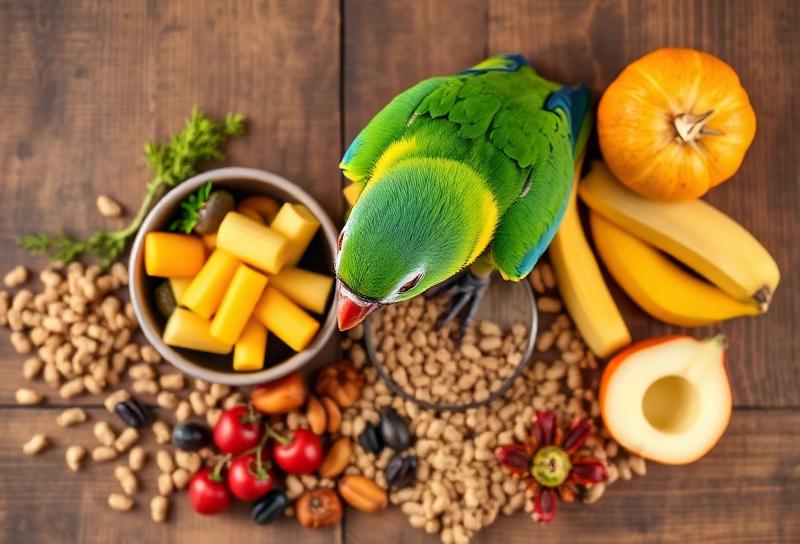
Parrot Diet and Nutrition: What to Feed Your Parrot for Optimal Health
A proper diet is essential for your parrot's health and longevity. Learn what to feed different parrot species, foods to avoid, and how to introduce new foods.
Introduction to Parrot Nutrition
What you feed your parrot directly impacts their health, plumage quality, behavior, and lifespan. Unfortunately, many parrot health issues stem from poor diet. This guide will help you provide optimal nutrition for your feathered friend.
Why Diet Matters So Much
Common Diet-Related Health Issues
- Fatty liver disease: From high-fat seed diets
- Vitamin A deficiency: From seed-only diets (poor in vitamin A)
- Calcium deficiency: Especially in African Greys
- Obesity: From too many seeds and nuts
- Malnutrition: From unbalanced diets
- Weakened immune system: From nutritional deficiencies
The Seed Diet Myth
Historically, parrots were fed primarily seeds. We now know this is inadequate:
- Seeds are high in fat, low in vitamins
- Wild parrots eat seeds as PART of a varied diet
- Seed-only diets shorten lifespans significantly
- Most seed mixes lack essential nutrients
The Ideal Parrot Diet
Basic Diet Breakdown
| Food Type | Percentage | Notes |
|---|---|---|
| Vegetables | 20-30% | Variety is key |
| Fruits | 5-10% | Natural sugars - moderate |
| Seeds/Nuts | 5% max | Treats only |
Pellets: The Foundation
Quality pellets are nutritionally complete and should form the base of your parrot's diet.
Choosing Pellets
- Select species-appropriate size
- Avoid artificial colors and flavors
- Look for organic options when possible
- Top brands: Harrison's, Roudybush, TOP's, Zupreem Natural
Converting to Pellets
If your bird is on seeds, transition slowly:
- Mix 25% pellets with seeds for one week
- Increase to 50% pellets week two
- Continue gradually over 4-8 weeks
- Monitor weight during transition
Vegetables: Essential Variety
Vegetables provide vitamins, minerals, and enrichment.
Best Vegetables for Parrots
Dark Leafy Greens (daily)
- Kale
- Swiss chard
- Collard greens
- Spinach (in moderation—high in oxalates)
- Dandelion greens
Vitamin A Rich (several times weekly)
- Carrots
- Sweet potatoes
- Bell peppers (all colors)
- Butternut squash
- Pumpkin
Other Healthy Options
- Broccoli
- Cauliflower
- Green beans
- Peas
- Corn (fresh or frozen)
- Zucchini
Serving Vegetables
- Offer raw, steamed, or lightly cooked
- Vary the preparation (whole, chopped, mashed)
- Hang leafy greens for foraging enrichment
- Remove uneaten fresh food after 2-4 hours
Fruits: Natural Treats
Fruits are healthy but contain natural sugars—offer in moderation.
Safe Fruits for Parrots
- Apples (remove seeds)
- Berries (blueberries, strawberries, raspberries)
- Bananas
- Grapes
- Mangoes
- Papayas
- Melons
- Oranges and citrus
- Pomegranate
- Kiwi
Fruit Guidelines
- Wash thoroughly
- Remove pits and apple seeds
- Offer variety throughout the week
- Don't exceed 10% of diet
Healthy Extras
Sprouted Seeds
Sprouted seeds are much healthier than dry seeds:
- Higher in protein and nutrients
- Lower in fat
- Easy to sprout at home
- Great enrichment
Cooked Grains and Legumes
- Quinoa
- Brown rice
- Lentils
- Chickpeas
- Pasta (whole grain, cooked)
Occasional Treats
- Whole grain bread (small amounts)
- Cooked egg (protein boost)
- Unsalted nuts (walnuts, almonds, macadamias)
- Seeds as training rewards
Species-Specific Considerations
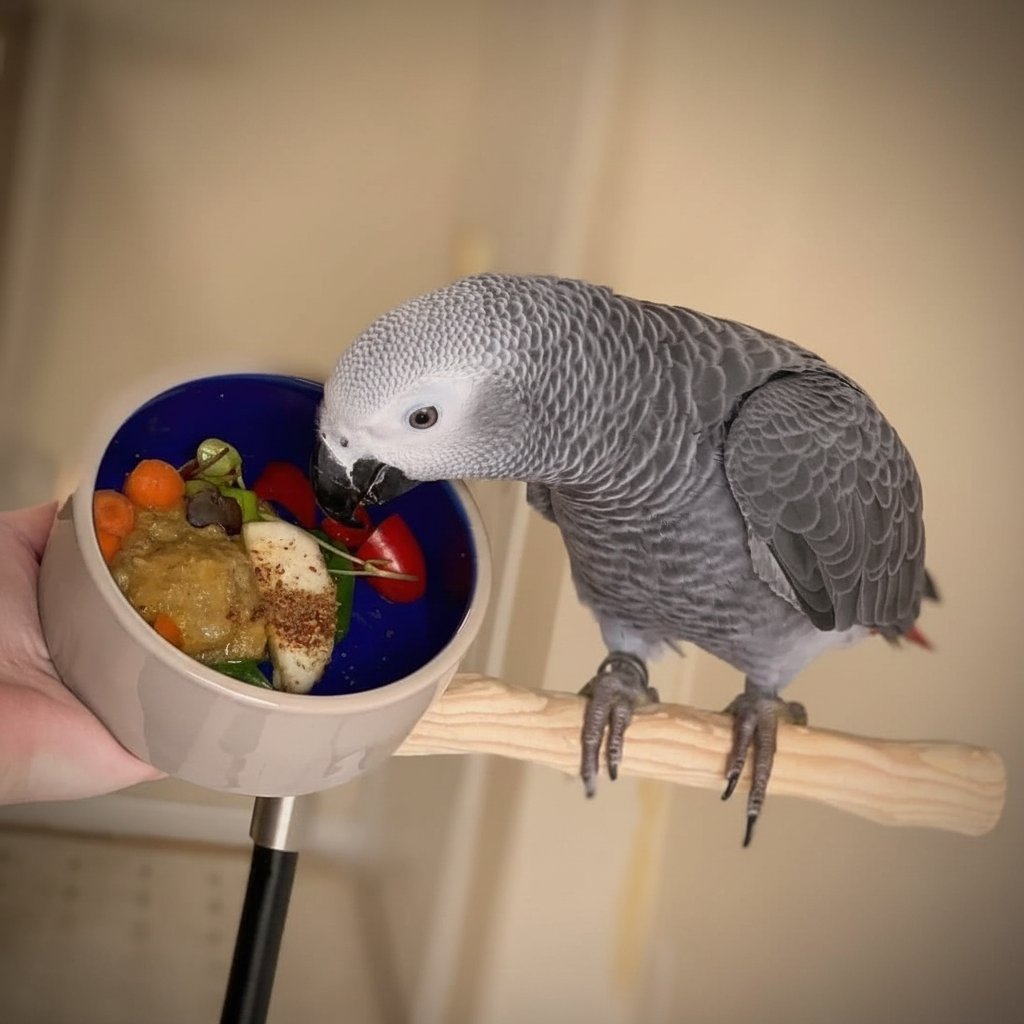
African Greys
- Higher calcium needs—include calcium-rich foods
- Prone to vitamin A deficiency—emphasize red/orange vegetables
- Consider calcium supplements if vet-recommended
Macaws
- Need more fat than smaller parrots
- Include nuts (macadamias, Brazil nuts) in diet
- Hyacinth Macaws need even higher fat (palm nuts)
Cockatoos
- Prone to obesity—limit fats strictly
- Focus on vegetables over fruits
- Low-fat pellet formulas recommended
Eclectus
- Sensitive to artificial additives
- Need high vitamin A—lots of red/orange vegetables
- Some owners feed higher fresh food ratios
Foods to NEVER Feed
Toxic Foods
- Avocado: Potentially fatal
- Chocolate: Toxic
- Caffeine: Toxic
- Alcohol: Toxic
- Onions and garlic: Toxic in quantity
- Fruit pits and apple seeds: Contain cyanide compounds
Unhealthy Foods
- High-salt foods
- Sugary processed foods
- Fried foods
- Dairy in large amounts
- Processed human snacks
Introducing New Foods
Parrots can be surprisingly picky. Here's how to encourage variety:
Strategies That Work
- Model eating: Eat the food in front of them
- Presentation matters: Try different cuts and preparations
- Persistence: Offer new foods 10-15 times before giving up
- Mix with favorites: Hide new foods in preferred foods
- Foraging: Make them work for new foods
Patience Is Key
Some parrots take months to accept new foods. Keep offering—nutritional variety is worth the effort.
Water Requirements
Fresh, clean water should always be available.
- Change water at least twice daily
- Clean bowls thoroughly
- Consider water placement (away from perches to prevent contamination)
- Some birds prefer water bottles
Supplements
Most parrots on a good pellet-based diet don't need supplements. However:
- Calcium: May be needed for laying females or African Greys
- Vitamin D3: If limited natural sunlight exposure
- Vitamin A: For birds on poor diets (transition to better diet instead)
Always consult your avian vet before supplementing.
Conclusion
A varied, balanced diet is one of the greatest gifts you can give your parrot. It takes effort to provide proper nutrition, but the rewards—a healthy, vibrant, long-lived bird—are immeasurable. Start with quality pellets, add abundant vegetables, moderate fruits, and minimal seeds/nuts, and you'll set your parrot up for a long, healthy life.
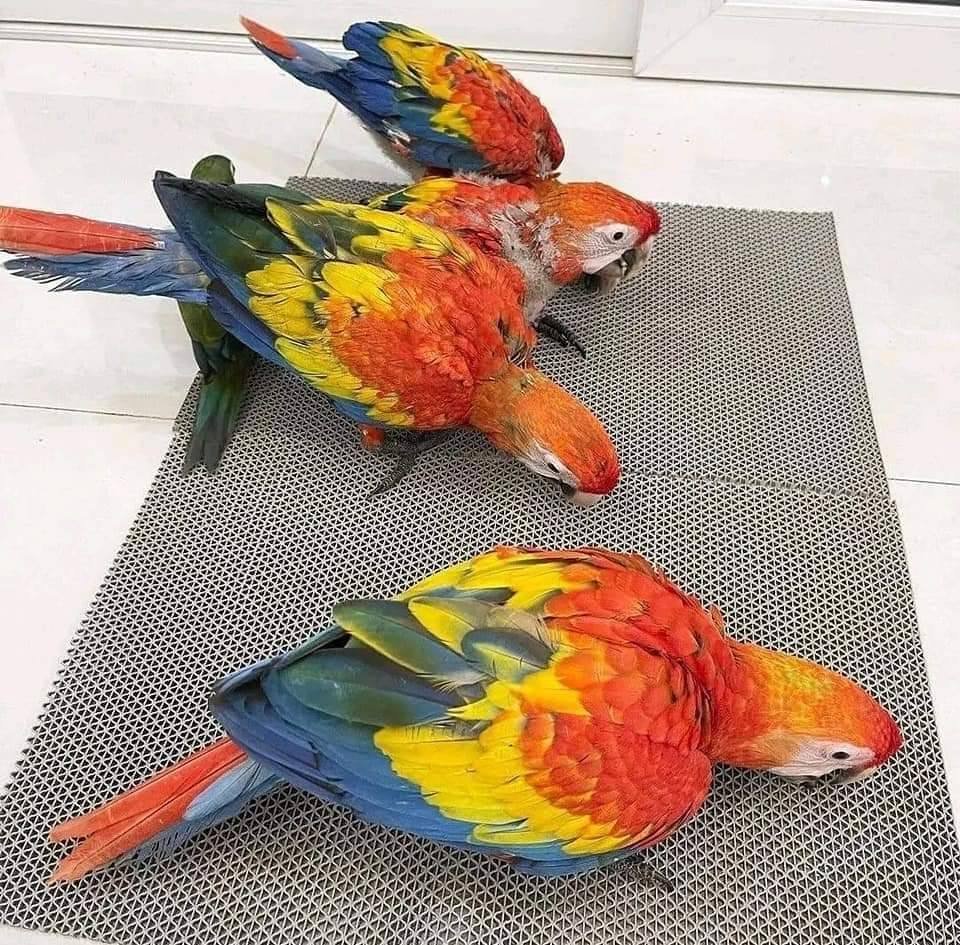
At Grace Parrots Aviary, all our birds are raised on optimal nutrition from day one. Browse our available parrots today.
Ready to Find Your Perfect Parrot?
Browse our hand-reared parrots, all raised with love and care.
Available Parrots
Have Questions?
Check out our FAQ for answers about purchasing, shipping, and caring for your new parrot.
Read our FAQ